

Help children see how numbers work.
Free math games where every number is a quantity you can see, always in its own color — from counting to 5 all the way to squares and cubes.
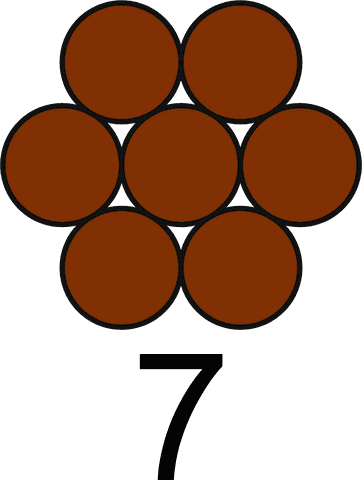
Seven is seven dots.
The squiggle 7 isn't seven. Seven is a quantity — and a child who can see it understands it long before they can recite it. Seven is always brown.

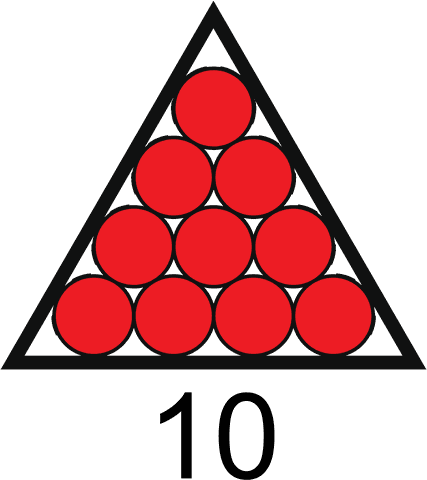
1 and 10 share a color. So do 2 and 20.
A ten is ten dots gathered into one triangle, in the tens digit's color — so 23 is two orange tens and three yellow ones. Place value you can see.
+
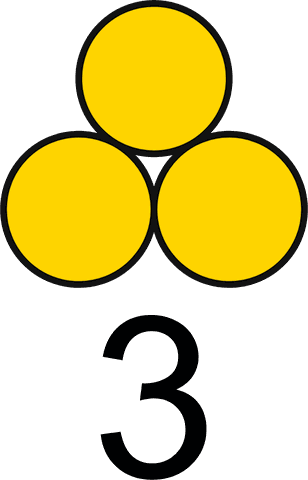
Buddies make 10.
9+1, 8+2, 7+3, 6+4, 5+5. Know the five pairs by sight and the hard facts get easy: 13 − 9 is a jump down to the ten.
The Tree of Math
Touch a light to open it · every page freePinch with two fingers to come closer
Pick your language
Pick once. Every game says its numbers in it.
Say it in your language
any age rootThe deepest root on the tree. A child counts in the language they think in — so counting aloud in Tiếng Việt, 中文, 한국어 or Français is not an add-on to the maths, it is underneath it.
Counting aloud
The numbers, said in seven languages.
Count & Say tap a number, hear it Language — start here everything in one placeFirst words
Picture-and-word vocabulary, then a game both ways round.
Vietnamese Tiếng Việt Chinese 中文 Korean 한국어 French Français Every language game both directionsJust listen to it
any ageNot maths, and nothing to get right. Eighteen classic stories read aloud, free, no sign-up — for the stretch of the day when a child has had enough of being taught.
Stories
Press play and listen.
Winnie-the-Pooh and the full-cast version The Odyssey for boys and girls, and the full text Tom Sawyer Mark Twain The Count of Monte Cristo Dumas Frederick Douglass his own narrativeThe whole Sherlock Holmes
All nine, in order.
A Study in Scarlet the first one The Adventures the famous short stories The Hound of the Baskervilles the best known All eighteen audiobooks the full shelfThe branches
about 6 to 9 2D → 3DIt forks once. Climb either side — the other one waits.
This is where a second and third direction appear. One number is a length — a line of dots. Two numbers make an area: rows times columns, the rectangle you turn and slice. Three make a volume: that rectangle stacked into layers. Same dots, one more direction each time.
Add and take away
Doubles first, because a double is its own picture.
Easy Addition adding 1, doubles, make-10 buddies Addition 1 to 5 one dot at a time Doubles a number plus itself Subtraction take one away, down to nothing Subtraction from 10 start at ten, come back down Addition & Subtraction Box spin it, pinch it, load both sides and crash them Dot Battle tap your side — the dots crash one for one, leftovers winEqual groups
Two dimensions. One rectangle holds × and ÷ at the same time — its area is rows × columns. Turn it, or cut it.
Turn the Block 4 × 6 and 6 × 4 are the same block Slice the Block cut it down, across, or bothSquares and cubes
Two, then three. A square is an area you can build; a cube is that square stacked into a volume.
Build the Square lay the border yourself, 1 to 100 The Changing Ruler the gaps between squares grow by 2 — three numbers to see it Squares to 110 cut and slide: 35 × 35 is 3 × 4 hundreds and 25 Build the Cube stack the layers, skip-count up Step by Step 9 plus how many? Squares Adventure the timed track, level by level Squares & Cubes every page in one placeTime and logic
The same colors, pointed at a clock and a puzzle.
Clocks time as quantities, not just hands Color My Sudoku every number is that many dots Logic Puzzles work it outThe trunk
about 5 to 7 1DTen is worth a month on its own. Everything above this point leans on it, and a child who hasn't got ten cannot climb — however good the branches look.
Ten
Pairs that make it, every way to split it, ten held as one thing.
Making 10 find every pair of buddies Every Way to Make 10 all the ways to split it Ten and Under the facts to ten Five and Under start here if ten is too big Crash the Dots two reds crash into one orange twoTwenty, then place value
Past nine, the color stops being decoration and starts telling you which place a digit lives in.
Counting to 20 the second ten-frame fillsThe roots
about 3 to 5 1DEverything down here lives in one direction: more dots is further along the line. Ten dots genuinely take more room than three — which is the whole point, and the thing most workbook number lines get backwards by shrinking the pictures to fit the page.
Nothing is written down here. A child who can see small amounts, count both ways, and tell more from less has everything they need for the rest of the tree.
See it
One, two, three recognised on sight — before any counting.
Numbers 1 to 10 meet each number as an amount One More, One Less count to 5 and back, one at a time Roll to 5 marbles land one at a timeCount it
To ten, and back down again. The last word you say is the answer.
Counting to 10 the dot walks the number line Counting to 20 two ten-frames · Say It First Count & Say out loud, seven languagesCompare it
Bigger and smaller — the question swaps, so you have to look.
Bigger / Smaller which pile has more, which has fewer Find the Number spot it among the rest Line Them Up stand them side by side — no counting Your own language count in the one you think inYou are standing on the ground. Everything above you is the climb.

Every page, as a button
The same places the tree goes, if you would rather just press one.
Math
Counting, adding, taking away, and making 10 — watch the video, play the game, do it yourself.
Sudoku
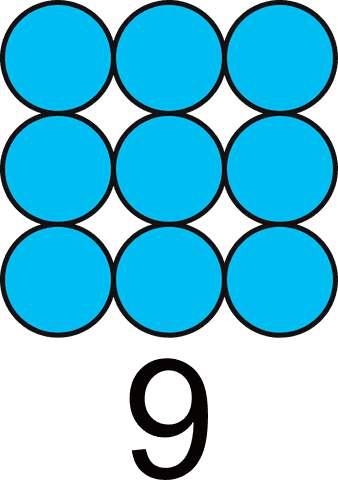
Color My Sudoku and I Like Pink Sudoku — every number is that many colored dots.
Counting
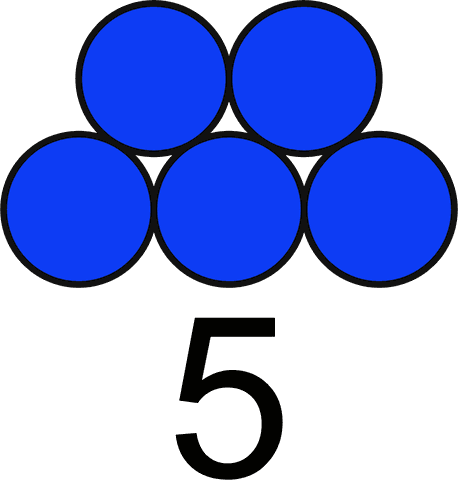
Count to 5, to 10, to 20 — dots on the number line, said out loud, in seven languages. A new counting game added a day at a time.
🎯Where Do I Start?
A short test that finds the first thing a child does not know yet, and sends them there. It stops as soon as it has found the edge — most finish in under a minute.
➗Which Way?
Jump Down or Climb? More than half, come down from the top. Less than half, climb up. And a double is a dead heat — both ways agree, which is the proof they are one system.
⤵️Jump Down
Taking away a big number. Come down from the top, rest on the ten, then take the rest. 12 take away 9: drop 2 to the ledge, then 7 more.
⤴️Climb
Taking away a small number. Climb up to the ledge, then on to the summit — the answer is how far you climbed. 12 take away 3: up 7, then 2, so 9.
Between Two Squares
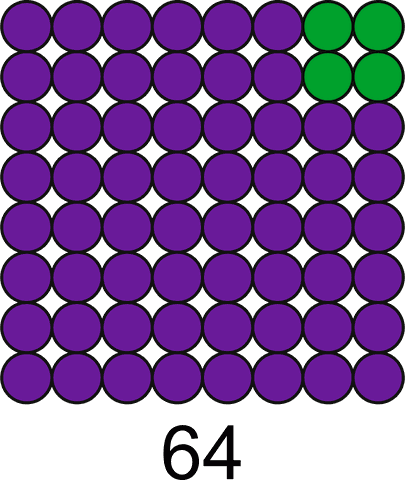
A number lands in a gap. Which square is below it, which is above, and which is it nearer? Squares to 100×100 and cubes to 25×25×25.
Every Number
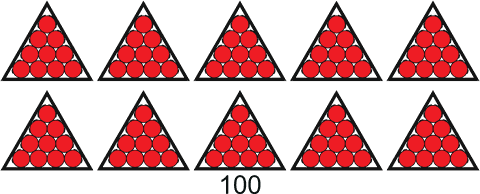
All one hundred, each one a picture of how many. Touch one and hear it, or light up the squares and watch them curve down the grid.
Clocks
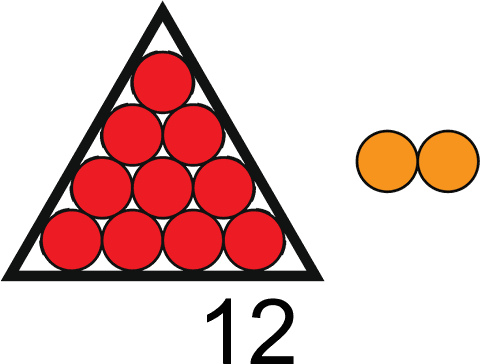
Tell the time the ColorMyMath way — Annie's Clock, the falling-dots clock, and About Time.
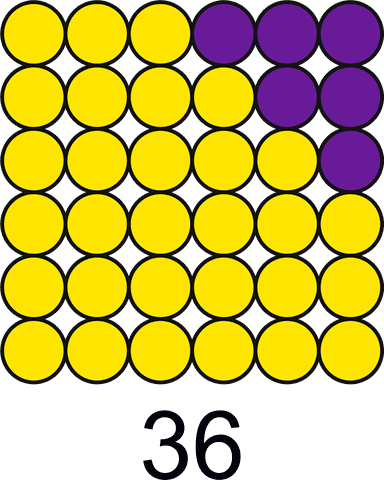
Squares & Cubes
All the squares and cubes games in one place — the Squares Adventure track, Step by Step, the one-tap dot squares, and the 3-D cubes.
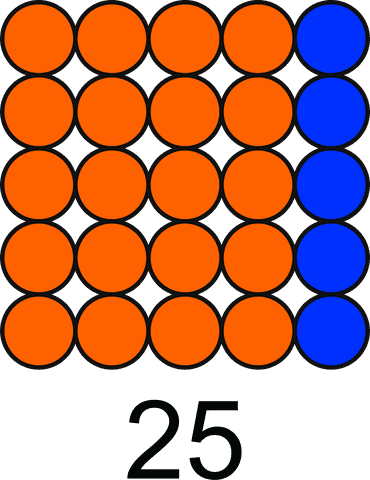
Squares Adventure — the Track
Learn your numbers through the squares: each one with its double (7 + 7, then 7 × 7) up to 15, then doubling — 2, 4, 8, 16 … 256 — then Fibonacci, up to 144. Timed, starred, one level unlocks the next.
3D Multiplication
See 4×4×4=64 as a real cube you can spin. Change the numbers and watch it grow.
🌲The Tree of Math
The whole thing in one place, in the order a child actually needs it — three roots, a trunk of ten, and the branches above. Every page free.
I Can
The picture book, page by page. One up to ten and all the way back down — a number, its word, and something you can do. Five says hello going up and bye coming down.
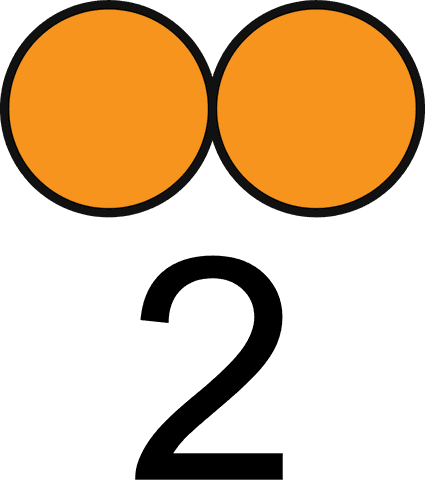
One More, One Less
Counting to 5 and back down, one at a time. Add one and the whole group changes color and re-forms — two orange dots become a yellow triangle.
Bigger by Shape
Which one is more? Every number wears its own shape — a four is a square, a ten is a triangle of ten — so you tell by looking instead of counting.
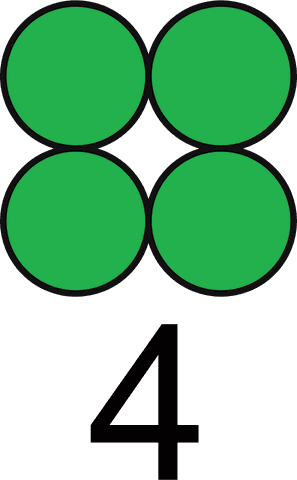
Line Them Up
Bigger and smaller without counting. Stand the two groups on the same line and the taller one is bigger — then the pairs match off and what sticks out is how many more.
Crash the Dots
Send two reds into each other and they become one orange two — the color change is the answer. Past nine they make a ten-triangle. The − side takes away.
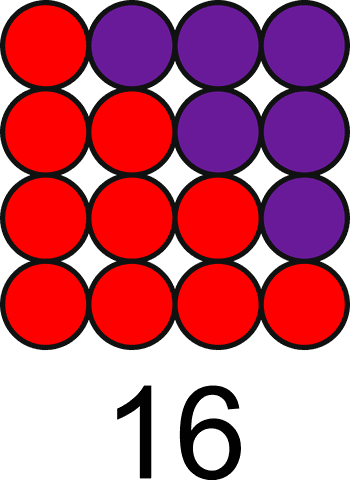
Turn the Block
Multiplication as a rectangle of dots. Turn it a quarter turn and not one dot moves — so 4 × 6 and 6 × 4 are the same block. When both sides match, it's a square.
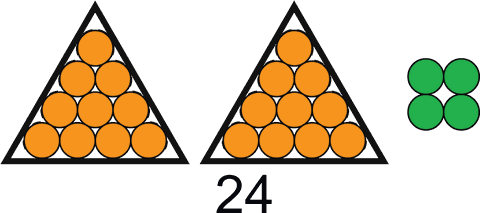
Slice the Block
The same rectangle, divided. Cut it down into columns or across into rows — one block, two facts: 24 ÷ 4 = 6 and 24 ÷ 6 = 4.
🎮Games
Count to 20, Making 10, Partitions of 10 — number games to play with.
🔎Find a Game
Tell us what your child is learning — we'll point you to the right game.
🎧Free Audiobooks
Classic stories read aloud — Tom Sawyer, Monte Cristo, and more. Free, made especially for you.
✨New Today
Something new every day: a clock, a cube game, a picture book and a 3D view. The newest ones, with what each teaches.
⛵Explorers on the Map
Columbus, da Gama, Magellan and more. A ship sails each voyage on a satellite map and tells the story out loud.
✏️Trace the ABCs
Trace every letter with your finger — big clean letters, no confusing lines, and pictures that say their word.
🌀Tracing Fun
Lines, waves, spirals — then help the mouse find the cheese in mazes that grow trickier and trickier.
🌍Language
Vocabulary lessons and games in Vietnamese, Chinese, Korean, and French.
Full Math Games Access
Every math game, all Sudoku puzzles, and Annie's Clock — all in one place.
🎨Make It Your Colors
Pick your own color for every number, then play every game in your colors. Just $2.
🛍️Merchandise
Birthday & date shirts and number tees — tell us your day or number and we'll take you right to it. Supports the project.

Drawings by E. H. Shepard, from Winnie-the-Pooh (1926) and
The House at Pooh Corner (1928), which passed into the United States public
domain in 2022 and 2024. Shown here in white because this page is dark; not a line
has been changed. Thank you, open source — and thank you, Pooh.
Listen to the whole book →